"London's transport system was given a £1.6 billion government bailout yesterday after Sadiq Khan, the mayor, threatened to cut bus and Tube services."
Yet in the government's official briefing, people who can't work from home are being encouraged to return to work but, if at all possible, do not use public transport.
Not really joined up thinking is it?
Friday, 15 May 2020

Friday, 8 May 2020
Man is the Virus
There is a new theory going around than Man is the Virus rather than Covid 19.
On a global scale that is worth thinking about.
Many viruses are beneficial to man in that they infect and destroy harmful bacteria. These are called bacteriophages and are actively used in some therapies. The bacteria are harming man so viruses are used to kill off the bacteria. On a global scale man is harming creation - so could it be that creation is trying to save itself by introducing a new virus to kill off a few thousand people and reduce the damage being caused? Comparative photos of normally polluted cities before and during lockdown show clearly that the virus has been very effective in some places in reducing pollution levels. Covid19 virus has also been isolated from large particles of air pollution which keep it airborne for longer than it would be otherwise. Conclusion: reduce pollution and the virus will not be able to spread so rapidly.
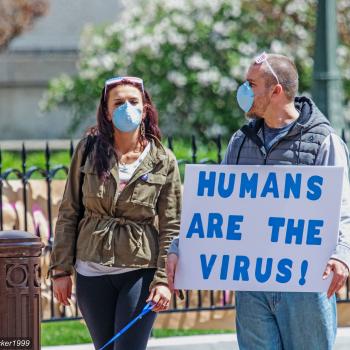
On a global scale that is worth thinking about.
Many viruses are beneficial to man in that they infect and destroy harmful bacteria. These are called bacteriophages and are actively used in some therapies. The bacteria are harming man so viruses are used to kill off the bacteria. On a global scale man is harming creation - so could it be that creation is trying to save itself by introducing a new virus to kill off a few thousand people and reduce the damage being caused? Comparative photos of normally polluted cities before and during lockdown show clearly that the virus has been very effective in some places in reducing pollution levels. Covid19 virus has also been isolated from large particles of air pollution which keep it airborne for longer than it would be otherwise. Conclusion: reduce pollution and the virus will not be able to spread so rapidly.
Inger Andersen (Executive Director of the U.N. Environment Programme) -
"Nature is sending us a message".
Duchess of York: "Mother Nature has sent us to our rooms....... like the spoilt children we are. She gave us time, and she gave us warnings. She was so patient with us. She gave us fire and floods, she tried to warn us but in the end she took back control."
Tuesday, 5 May 2020
Lockdown Birthday Party
I attended my first online birthday party yesterday. An interesting concept but a necessary one under the current lockdown restrictions. It was my grandson's 2nd birthday. He was too young last year to understand the concept of "birthday", but he's definitely got the hang of it this year. Despite only being 2 he has all the necessary vocabulary - "happy birthday", "presents", "balloons", "cake" etc. And, unlike most boys, he is extremely tidy, tearing off small pieces of wrapping paper from a very large present and handing them individually to his mum for safekeeping.

The idea was we would organise a family Zoom conference with all his relatives to watch him blow his candles out, sing him Happy Birthday and then eat our own cake that we had pre-prepared. Unfortunately our cake wasn't quite finished in time and his aunt could not make a cake because her grocery delivery was not due until the following day. Still - as lockdown birthdays go it wasn't bad!
Saturday, 2 May 2020
Locust Plagues
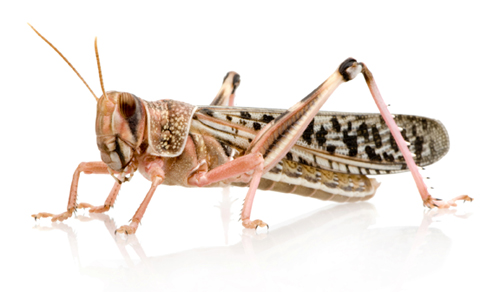
If you thought coronavirus was bad enough, think yourself very lucky you don't live in East Africa at the moment. At the beginning of April a local pastor there reported the arrival of a huge swarm of young desert locusts estimated to cover 100,000 acres (by comparison, the whole of Tendring District is only 83,392 acres). This would therefore be a cloud covering everywhere from Colchester to Harwich and beyond! There has already been a huge plague of locusts in early 2020 which devastated the crops of East Africa. This second swarm is allegedly 20 times as bad. The insects are all young adults which eat more than their older counterparts and will live longer. They have arrived just as the new plantings are beginning to shoot and are stripping everything in sight.
Thursday, 30 April 2020
Social Distancing in the Church of England
Despite the fact that the term "Social Distancing" has only been coined in the last few months, Martyn Percy reports in this week's Church Times that the Church of England has been practising it since 1662.
He refers to the Sunday 8.00am Book of Common Prayer eucharist -
"Minimal eye contact with your neighbour. Sit at the back of the church and apart from others, ideally in your own designated pew, despite there being plenty of room at the front. No exchange of the Peace or any other awkward gesture or unnecessary physical proximity is required. A nod to the priest when you leave, perhaps - no handshake, lest one be corralled into a rota for making the coffee or mowing the churchyard."
By this continued ritual the church consecrates social distancing at the beginning of every week.
He refers to the Sunday 8.00am Book of Common Prayer eucharist -
"Minimal eye contact with your neighbour. Sit at the back of the church and apart from others, ideally in your own designated pew, despite there being plenty of room at the front. No exchange of the Peace or any other awkward gesture or unnecessary physical proximity is required. A nod to the priest when you leave, perhaps - no handshake, lest one be corralled into a rota for making the coffee or mowing the churchyard."
By this continued ritual the church consecrates social distancing at the beginning of every week.
Tuesday, 28 April 2020
Why we shouldn't eat bats
13 ‘And these you shall regard as an abomination among the birds; they
shall not be eaten, they are an abomination: the eagle, the
vulture, the buzzard, 14 the kite, and the falcon
after its kind; 15 every raven after its
kind, 16 the ostrich, the short-eared owl, the sea
gull, and the hawk after its kind; 17 the little
owl, the fisher owl, and the screech owl; 18 the
white owl, the jackdaw, and the carrion vulture; 19 the
stork, the heron after its kind, the hoopoe, and the bat. [Leviticus 11:13-17]
11 You may eat any clean bird. 12 But these you
may not eat: the eagle, the vulture, the black vulture, 13 the
red kite, the black kite, any kind of falcon, 14 any
kind of raven, 15 the horned owl, the screech owl,
the gull, any kind of hawk, 16 the little owl, the
great owl, the white owl, 17 the desert
owl, the osprey, the cormorant, 18 the stork,
any kind of heron, the hoopoe and the bat.
[Deuteronomy 14: 11-18]
Apart from the zoological
error of classifying bats as birds, both these passages clearly indicate that
bats are considered unclean and must not be eaten.
Bats are about the
most pathogen-laden animals in the world. Bats can carry up to 5,000 different
pathogens or more. In recent decades there has been a great increase in the
number of human infections associated with bat viruses. Nevertheless, bats are
regularly eaten in many parts of the world, including China.
So far, it is
believed that the current coronavirus pandemic called COVID-19 originated from
bats at a “wet market” in the megacity of Wuhan, China. It is also thought that
one or more pathogens were transmitted there from bats to humans. All kinds of
wild and exotic animals were sold there until the government shut this market
down.
Studies have shown
that bats can carry hundreds of different types of coronavirus and that the
COVID-19 genome is at least 96% the same as the genome of a coronavirus in
bats, making it fairly certain COVID-19 came from bats.
After the SARS
outbreak in 2002-2003, which was believed to have been caused by people eating
bats, China was criticized for not outlawing the eating of bats. But when
COVID-19 was discovered to have originated from bats at the wet market in
Wuhan, China responded (in January 2020) by banning the eating of bats.
So don’t be fooled by
the preachers telling us that the pandemic is God’s judgement on mankind for
some other sin. It is nothing of the kind. It is the natural consequence of
ignoring God’s laws in the first place.
Monday, 27 April 2020
Pandemics in Bury St Edmunds
I have just discovered an intriguing article outlining how
the town of Bury St Edmunds dealt with various pandemics in the past. The
procedures seem remarkably similar to those being used to combat the
coronavirus pandemic we are dealing with at the moment. Relevant extracts are
quoted below. The full article can be found at:
https://drfrancisyoung.com/2020/03/17/how-bury-st-edmunds-dealt-with-past-pandemics/
“Plague returned in 1589, causing the Feoffees of the
Guildhall Feoffment (who informally ran the town in the absence of a
Corporation) to erect tents to house plague victims. The houses of infected
families were boarded up to prevent anyone entering or exiting, while the
parish constables were paid to take food and other necessities to the
afflicted.”
“Bury’s worst ever outbreak of the plague occurred in the
summer of 1637, when 10% of the town’s population (about 600 people) died
within nine months. People remained in their homes and trade came to a
standstill; contemporary accounts describe grass growing in the streets. It was
during this outbreak that St Peter’s Hospital on Out Risbygate was used as a
‘pesthouse’ (quarantine for those infected with the plague) while the bodies of
the dead were buried in the pit opposite.”
“The ‘plague stone’, which is now located outside West
Suffolk College is reputed to have been where people were required to wash
their coins in vinegar in a cavity in the stone before they entered the town
during 17th-century outbreaks of Plague.”
“Bury was not affected by the infamous outbreak of plague
that devastated London in 1665, largely because the Corporation implemented
strict measures to prevent any contact between Bury and London and sealed the
gates of the town.”
“Even in the Middle Ages, it was well understood that
self-isolation was a way to protect the population at large from infectious
disease. However, by the 17th century the social classes dealt with epidemics
very differently, with the poor barricading themselves in their houses in the
hope of escaping infection while the wealthy left the town for the countryside.
In one respect, the wealthy who fled were right that the close quarters living
of early modern urban life contributed to the spread of disease, but by leaving
the town they also ended up infecting other places if they themselves were
carriers of the disease. For most, all they could do was wait out the
pestilence while trying to have as little contact with others as possible.”
Subscribe to:
Posts (Atom)